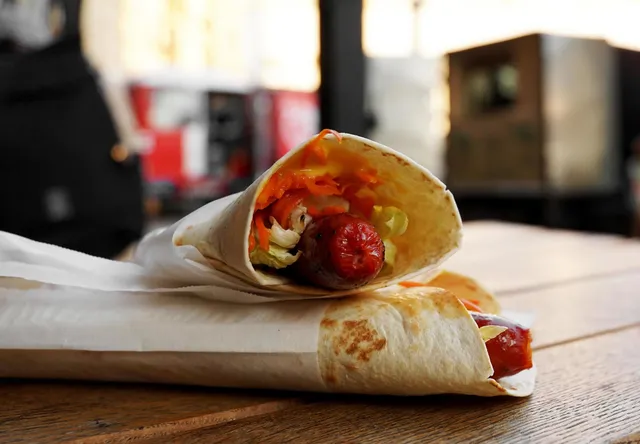
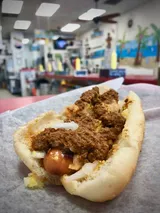
Israel's hot dog, the naknikiya, is a bun serve – at chains, kiosks and dedicated sausage shops alike, the frankfurter arrives in a roll. The sausage that goes into a pita is a different one: merguez, at home in Israel's grill stands.
Merguez comes from the Maghreb – the northwest African coast, today's Morocco, Algeria, Tunisia and Libya. It is a thin, fresh sausage, traditionally lamb, beef or a mixture of the two, packed into a slender lamb casing and seasoned hard: harissa, the region's chili paste, brings the heat, with cumin, coriander, garlic and paprika behind it, and fennel in the Tunisian style. The paprika and chili give merguez its brick-red colour, inside and out. It is never made with pork, which is part of how it travelled: North Africa's Jewish communities made merguez their own, and families who came to Israel from the Maghreb brought the sausage with them. (The fuller origin story sits with the same sausage in a French baguette, on the Merguez Frites page.)
In Israel the sausage took a local turn. The merguez on an Israeli grill is typically beef-led – beef with lamb in support, or beef alone – seasoned with the same harissa-led spice set. It is the version the grill stands slice into pitas.
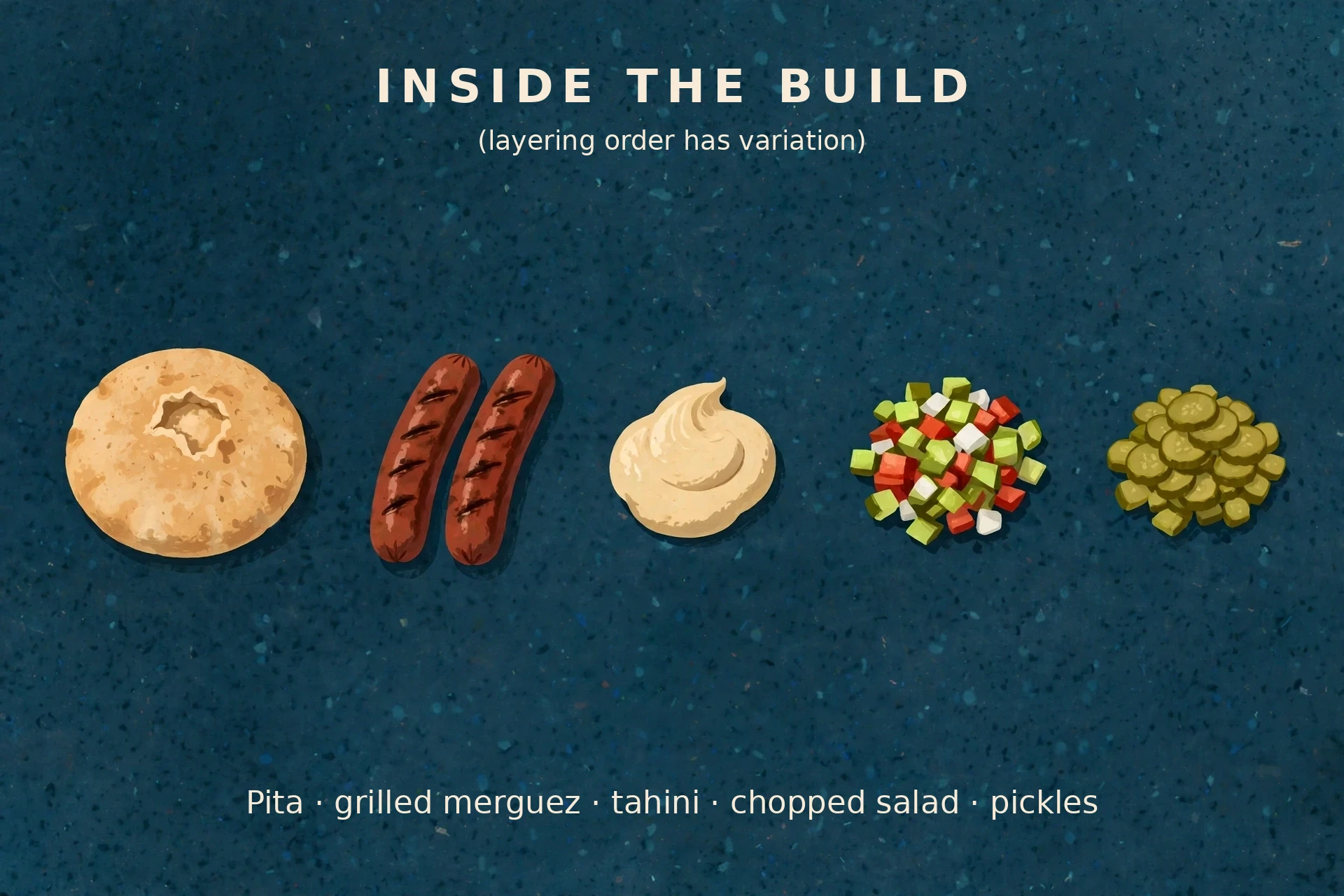
Those stands – the shipudiya, or skewer houses – work to a simple format. Meats come off the charcoal grill and are stuffed into the customer's choice of pita, laffa or baguette, then dressed from a standing pita station: tahini, chopped salads, pickles and spreads. Merguez is a regular line on those menus, and in a pita it takes the station's full treatment – order a kebab, a chicken skewer or a merguez and the pita is built the same way.
That is the honest shape of merguez b'pita: not a codified style with a fixed build of its own, but a standard, named item inside the grill-stand format – the spicy sausage, the warm pita, and the station. No egg, no hummus spread as standard; the pita station is tahini, salad and pickles, and the merguez brings the heat.